Estimate kidney function with the eGFR calculator
Enter your laboratory serum creatinine, age and sex to estimate adult eGFR and see its GFR category. Interpret the result with trends, urine tests and clinical context.
Instant Results
Get your eGFR value in seconds
CKD-EPI 2021
Race-free adult equation
100% Free
No registration required
Online eGFR Calculator from Creatinine, Age & Sex (CKD-EPI 2021)
Enter serum creatinine, age, and sex to calculate eGFR online and estimate your kidney function using the current CKD-EPI 2021 equation.
Enter Your Values
Fill in the form on the left and click "Calculate eGFR" to see your results here.
Common Risk Factors for Chronic Kidney Disease
Use this educational checklist to identify topics to discuss with a clinician. It is not a validated risk score and does not calculate your individual likelihood of CKD or replace an assessment.
Checking no items does not prove that kidney disease is absent. Symptoms, laboratory trends, medicines, and health history still matter.
Select any risk factors that apply to you. This educational checklist is not a validated risk score or diagnosis
Calculate eGFReGFR Results, Normal Ranges & CKD Stages Explained
Learn what eGFR means, how the CKD-EPI 2021 equation estimates kidney function, and how to interpret creatinine-based kidney test results with more confidence.
What Is eGFR? Normal Range, Meaning & Kidney Function
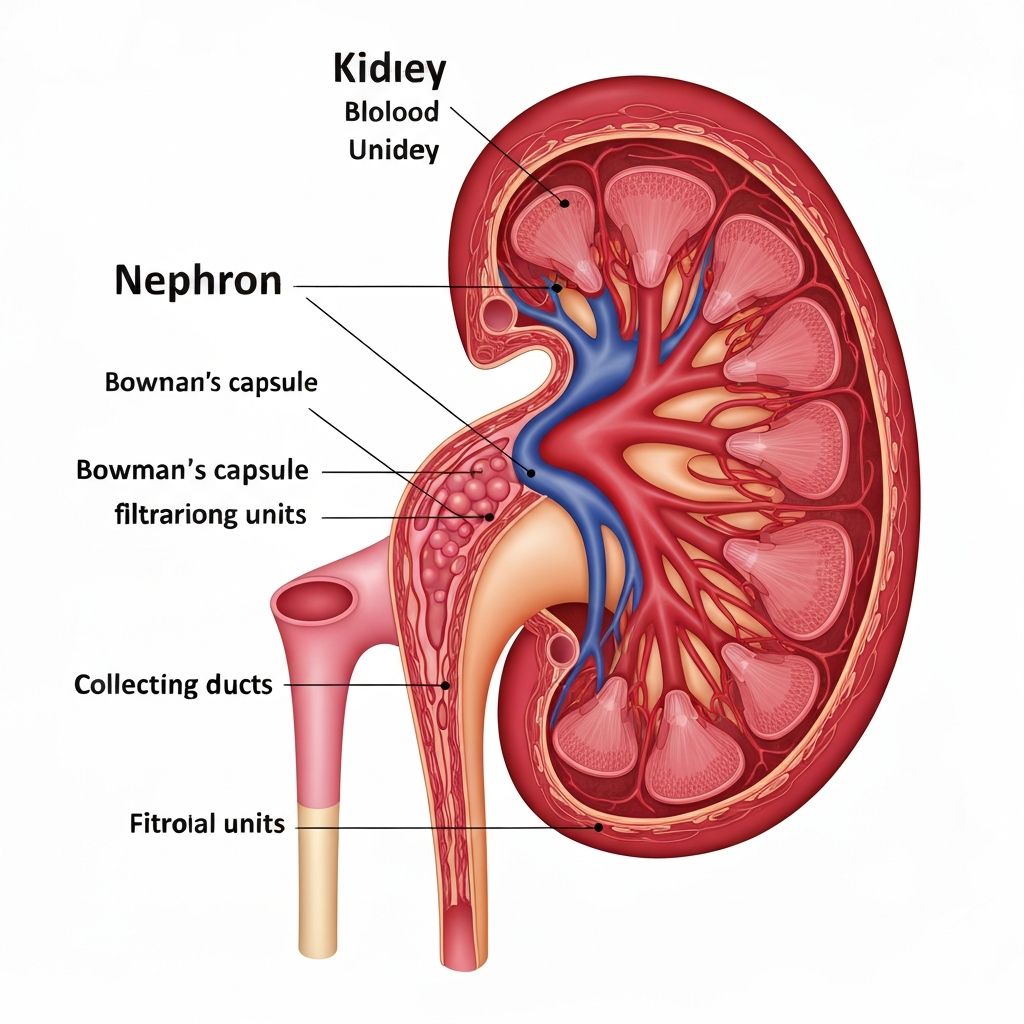
The estimated glomerular filtration rate (eGFR) is a calculated estimate of kidney filtration, not a direct measurement. This adult calculator uses the 2021 CKD-EPI equation. Interpret the result with urine albumin, previous tests and clinical context.
GFR describes the kidneys' filtration rate; eGFR is usually reported per 1.73 m² of body surface area. An eGFR of 90 or higher is in the G1 category, but urine albumin and other evidence of kidney damage still matter. Population averages decline with age, yet age alone cannot establish that a low or falling result is harmless. Interpret the number together with prior results, urine tests and clinical context.
Doctors use eGFR to screen for chronic kidney disease, monitor changes over time, decide when to order urine testing, and guide medication choices. That makes eGFR far more than a single lab number—it is a core part of understanding kidney health and CKD risk.
The CKD-EPI 2021 Equation: Race-Free eGFR Formula Explained
The adult calculator uses the race-free CKD-EPI creatinine equation (2021). It also supports the 2021 combined creatinine–cystatin C equation when both markers are entered. Combined estimates often improve precision, especially near a clinical decision threshold. Neither equation directly measures GFR, and a laboratory or treating team may select another validated equation for its population and purpose.
The U.S. NKF-ASN task force recommended the refitted race-free CKD-EPI equation in 2021. Its coefficients were recalculated rather than simply removing the old race multiplier. A formula change can alter eGFR even when creatinine is unchanged.
The adult creatinine equation uses serum creatinine, age and sex. Muscle mass, diet, medicines and acute illness can affect its accuracy. A combined creatinine-cystatin C estimate may help when accuracy could change a clinical decision.
eGFR Ranges & CKD Stages Explained (G1–G5)
These are GFR categories, not a diagnosis from an online test. CKD requires kidney abnormalities lasting at least three months; G1 and G2 also need another persistent kidney damage marker. Interpretation considers the cause and urine albumin.
≥90
Normal or high kidney function
60-89
Mildly decreased function
45-59
Mild to moderate decrease
30-44
Moderate to severe decrease
<30
Severe decrease or failure
How to Use an eGFR Calculator With Creatinine Results
Our free eGFR calculator online is built to make kidney function checks straightforward. Follow these steps to calculate eGFR from your lab report:
- 1Enter the serum creatinine value from your blood test and choose the correct unit, either mg/dL or µmol/L.
- 2Add your age in years, because kidney function estimates change across adulthood and the calculator is intended for adults aged 18 and older.
- 3Select your sex, which is part of the CKD-EPI 2021 calculation used to estimate glomerular filtration rate.
- 4Select Calculate eGFR to view the estimate and its GFR category. A category alone does not diagnose CKD.

Why Monitoring eGFR Matters for Kidney Health
Early Detection
Clinicians use blood and urine tests to detect kidney abnormalities. Who needs screening and how often depends on risk and clinical context; a calculator does not replace those tests.
Track Progress
Monitor changes in kidney function over time. Use our GFR calculator online free to track your results and share them with your healthcare provider.
Medication Safety
Kidney function can affect drug dosing. The correct measure, units, dose and monitoring depend on the specific drug label and clinical situation; discuss them with a clinician or pharmacist.
Risk Assessment
eGFR helps assess cardiovascular risk and overall health status. Low kidney function is associated with increased risk of heart disease and other conditions.
Treatment Planning
Healthcare providers use eGFR to plan treatments and interventions. Early intervention can slow the progression of kidney disease significantly.
Lifestyle Guidance
Diet and activity plans depend on nutritional status, laboratory results and treatment. Appropriate changes support health, but do not guarantee an increase in eGFR.
Kidney Disease Risk Factors That Should Prompt eGFR Testing
Knowing your risk factors can help you decide when to ask for creatinine testing, urine albumin testing, and regular eGFR monitoring. If any of the items below apply to you, proactive kidney screening becomes more important.
- Diabetes (type 1 or type 2)
- High blood pressure (hypertension)
- Heart disease or family history of heart disease
- Obesity or being overweight
- Family history of kidney disease
- Age 60 years or older
- Prolonged use of NSAIDs or certain medications
- Smoking
- African, Hispanic, Asian, or Native American heritage

Why Use Our Free Online eGFR Calculator?
Free to use, no registration required
Latest CKD-EPI equation standard
Instant calculation results
Available anytime, anywhere online
A calculation example and its limits
For a 55-year-old woman with serum creatinine of 1.0 mg/dL (88.4 µmol/L), the CKD-EPI 2021 creatinine equation gives approximately 66.5 mL/min/1.73 m². The calculator displays 67 after rounding. This is the G2 filtration category, not a diagnosis of stage 2 CKD.
G1 or G2 alone does not establish chronic kidney disease. Kidney-damage markers, such as persistent urine albumin, and abnormalities present for at least three months matter. A sudden change needs assessment sooner; the three-month definition is not a reason to delay care. Compare previous results, the equation and units on the laboratory report, and urine testing with a clinician. Creatinine estimates can be unreliable during acute illness, pregnancy, or unusual muscle mass.
Equation and interpretation sources
eGFR Medication Dosing Guide – Renal Dosing for CKD
Drug labels may require eGFR or creatinine clearance, which are not interchangeable and may use different units. A clinician or pharmacist selects the method, dose and monitoring for the specific medicine.
- • Check whether the current official label uses eGFR or Cockcroft-Gault creatinine clearance
- • Ask your care team which symptoms and laboratory checks are needed to monitor adverse effects.
- • Review kidney effects and treatment benefits before starting or stopping a medicine.
- • Follow the specific drug label and prescription; do not extend dosing intervals yourself.
- • Repeat kidney tests as advised, particularly after illness or treatment changes.
Dose thresholds depend on the medicine, formulation, reason for use, age, weight, and the kidney estimate named in the current official label. Use the educational links below, then verify the decision with a prescriber or pharmacist.
MetforminCreatinine Clearance (Cockcroft-Gault)
Kidney-Friendly Diet Guide for Low eGFR and CKD
Food choices can support blood pressure control, help manage CKD symptoms, and protect kidney function over time when paired with medical guidance.
KDIGO suggests about 0.8 g/kg/day for adults with CKD G3–G5, with individual exceptions. Dialysis, childhood, frailty and undernutrition may require different goals. Plan intake with your care team or a renal dietitian.
KDIGO suggests sodium below 2 g/day for adults with CKD, with individual exceptions. Your care team sets the appropriate target. Compare food labels and discuss any restrictions rather than applying one limit to everyone.
Fluid goals depend on urine output, swelling, heart health and treatment, including dialysis. Follow your care team's individual plan; drinking extra water is not a treatment for a low eGFR.
Related Kidney & Renal Calculators: Creatinine Clearance & More
Explore related kidney calculators—including creatinine clearance vs eGFR tools—that complement eGFR results, medication dosing decisions, and broader renal assessment workflows.
CrCl = [(140 - Age) × Weight × (0.85 if female)] / (72 × SCr)
G1-G5 categories based on eGFR and clinical context
Based on multiple clinical variables and biomarkers
Understand Your Kidney Results
Start with three practical guides: age averages and CKD criteria, how eGFR is calculated, and what to check after a sudden change.
eGFR by Age: Averages, CKD Thresholds, and Reading Your Result
Compare published age averages with your result, understand why age does not change CKD thresholds, and use urine albumin and trends to plan follow-up.
Calculate eGFR from Creatinine: CKD-EPI 2021 and Its Limits
Use the CKD-EPI 2021 formula correctly, check creatinine units with a worked example, and understand why a precise calculation is still only an estimate.
Sudden eGFR Drop: Check the Report, Symptoms, and Follow-up
Distinguish a reporting change from a creatinine rise, recognize urgent warning signs, and prepare the information a clinician needs to assess a sudden eGFR fall.
eGFR & Kidney Function FAQ: CKD Stages, Results & Meaning
Read quick answers about eGFR calculation, creatinine units, CKD stages, result interpretation, and how to use our online kidney function calculator correctly.